An antique is an item at least 100 years old, vintage is an item at least 20 years old but younger than that, and retro is a style that looks back at the past, whatever its age. That is the short answer to antique vs vintage. In 2026 it means antique covers things made in 1926 or earlier, at least 100 years before today, while vintage covers things made after that and in 2006 or earlier, at least 20 years before today.
The longer answer matters if you are trying to work out what something is worth. Each of these words comes from a different place: one from customs law, one from a marketplace policy, one from the dictionary. They describe different markets, and the label you put on an item decides which sales you compare it with.
Antique vs Vintage vs Retro at a Glance
Here is how the three labels, plus the copies and the car term you will run into, line up as of October 2026.
| Label | Age rule | Who sets it | Cutoff in 2026 |
|---|---|---|---|
| Antique | 100 years or more | US customs law | 1926 or earlier, made at least 100 years before today |
| Vintage | 20 years or more | Marketplace policy, such as Etsy | 2006 or earlier, made at least 20 years before today |
| Retro | No age rule | Dictionary meaning: a past style | Can be new |
| Vintage-style or reproduction | No age rule | The seller's description | Can be new, or decades old |
| Antique car | 25 years or more | Car clubs such as the AACA | 2001 or earlier |
The antique line moves forward one year every year, which is why a piece that was vintage last year can be an antique this year. Retro never moves, because it is not about age at all.
Where the 100-Year Antique Rule Comes From
The 100-year figure is not a dealer's rule of thumb. It is written into US import law. Heading 9706 of the Harmonized Tariff Schedule covers "antiques of an age exceeding 100 years," and they enter the country free of duty.
That rule was not always a rolling one. The Tariff Act of 1930 exempted antiques made before 1830, a fixed year, and the 1963 edition of the US tariff schedules still read "other antiques made prior to the year 1830." The rolling century came with the 1966 importation act, which rewrote the provision to cover "other antiques made prior to 100 years before their date of entry." From then on, the cutoff moved forward with the calendar instead of staying at 1830.
Two details in the current rules are useful for anyone holding an old piece. The first is that the 100 years are counted at the date the item enters the country, so the cutoff rolls forward. The second is that, according to the customs regulation itself, qualifying antiques are admitted free of duty "though repaired or renovated." A repair does not stop a century-old chair from being an antique in the legal sense.
The same section draws a limit. When a substantial amount of new material has been added, duty is charged on the added portion, and a piece changed so much that it has become a different article loses free entry altogether.
What the law asks for that a label does not
The regulation, 19 CFR 10.53, lets a traveler's antiques in free only when the customs officer is "satisfied that the articles are of the requisite age." It also sets an extra duty for an article imported for sale as an antique that later turns out not to be as old as claimed, unless the importer withdraws the claim in writing before the examination starts.
A copy of a period piece made ten years ago does not meet that test, no matter how closely it follows the design. The heading is about when the object was made, not what it looks like.
That is the gap between the legal word and the everyday one. In a shop or an online listing, "antique" is a description the seller chooses. Nobody checks it at the door. A listing that says antique is a claim to test, not a fact.
What Vintage Means, and Who Decided on 20 Years
Vintage has no legal definition. The 20-year floor most buyers recognize comes from marketplace policy, and Etsy states it most clearly. Its vintage items policy says that for an item to be considered vintage on Etsy, it "must be at least 20 years old."
The same policy is a good lesson in how weak most age claims are. Etsy says it may ask sellers where their vintage items come from, how they determined an item's age and who the designer is. It also lists explanations that cannot be used to verify an item as vintage: that it was handed down from a relative who has been deceased for over twenty years, that another vintage seller is selling the same or a similar item, or that it was bought at an estate sale or yard sale.
Etsy's creativity standards also rule out resold commercially available items newer than 20 years old, "even if the item is designed to appear vintage." That sentence is the line between vintage and retro in a single clause.
Vintage covers a wide span
Because vintage starts at 20 years and runs up to the antique line, it covers about eight decades. A 1930s Art Deco lamp, a 1960s teak sideboard and a 2000s handbag can all be called vintage, and they sell to completely different buyers. When a seller says "vintage," the decade matters far more than the word.
Retro Is a Style, Not an Age
Retro is the label people confuse most often with the other two, and it works on a different axis. Merriam-Webster defines retro as "relating to, reviving, or being the styles and especially the fashions of the past," or "fashionably nostalgic or old-fashioned."
Nothing in that definition is about when the object was made. A toaster built last year in a 1950s shape is retro. So is a new turntable styled after a 1970s model, or a reproduction diner sign.
That makes retro the one label that can apply to brand-new goods. It can also overlap with vintage: a 1970s piece made to look like 1920s design is retro in style and vintage in age. When you see retro on a listing, read it as a description of the look, and look elsewhere for evidence of age.
Reproductions, Vintage-Style and Other Labels
Reproductions and vintage-style goods are where most labeling mistakes happen, because they sit between the age labels and the style label. "Vintage-style" or "vintage-inspired" means new goods made to look old, much like retro. "Reproduction" is narrower: a copy of a particular period design, sometimes sold openly as a copy and sometimes not.
Why a reproduction can still be vintage
A reproduction carries two dates: the period it copies and the year it was made. Only the second one sets its age. That is how a 1960s copy of an 18th-century chair ends up vintage by age while looking like an antique, and how a copy made ten years ago is neither antique nor vintage, whatever it imitates.
The price follows the second date as well. A period piece and a good copy of it sell to different buyers, and pricing one against the other's sales gives a misleading number in either direction: too high for the copy, too low for the real period piece.
Signs that point to a newer copy
No single clue proves an age, but several together tell you to slow down. Wear that looks even all over, rather than heaviest where hands and feet would have touched it, suggests artificial distressing rather than use. Fasteners, glue, hardware and labels that do not match the period an item claims point to a later date, or at least to later repairs.
A seller's own wording is evidence too. "Style," "inspired," "in the manner of" and "after" all describe how an item looks, not when it was made. A listing that uses them and also says antique is telling you two different things.
Car and collector labels
Car clubs keep rules of their own: the Antique Automobile Club of America celebrates cars 25 years and older, and the Classic Car Club of America limits its Full Classic label to fine cars built from 1915 through 1948. Neither tells you anything about a chair or a lamp. Collectible has no age rule at all, since anything people actively buy and sell can be collectible, so like retro it tells you about demand, not the calendar.
Why the Label Changes What Something Is Worth
The label matters for value because it decides which sales you compare your item with. If you search past sales for a "vintage dresser" when yours was made in 1910, you are pricing it against 1970s furniture. If you call a 1990s reproduction an antique, you are comparing it with pieces a century older.
A useful habit is to price with the most specific description you can support: the decade, the material, the maker if there is a mark, and the type of object. The label comes last, as a summary of what the evidence shows. Where an item has no mark and no clear age, the words people search with often matter less than the object's form and condition.
This is also where an estimate from comparable sales helps. Primo Worth identifies an item from one photo and, in Antique mode, gives a read-out on maker, era, origin and material, then checks the item against recent eBay sales where they exist and shows those sold listings so you can judge whether the matches are the right age and type. It is free to download, and you can try three scans free. It is an AI estimate, not a professional appraisal, and a photo cannot confirm how old something is or who made it.
Age Is Not Value: What Moves Prices Instead
Being an antique does not make an item valuable. Plenty of 100-year-old objects were mass-produced and survive in large numbers, and some whole categories of antiques have fallen in price as tastes changed.
Traditional dark-wood furniture, often called brown furniture, is the clearest case. The furniture buying guide from the Antiques Trade Gazette describes the Antique Furniture Index, which tracked a basket of typical 18th- and 19th-century pieces from 1968. It reached a high in 2002 and was down 45% from that peak by 2016, when its compiler ended the annual audit. The same guide says davenports, Pembroke tables and breakfront bookcases have fallen from favor, with plenty on offer for modest three-figure sums.
Not everything fell. The guide notes that pieces by famous makers such as Chippendale and Gillows still command high prices, and that modern vintage furniture has come to the fore more recently.
Condition, demand and maker
Condition counts at every age, but buyers judge it against the age. The same guide says a premium is paid for an old piece that has escaped the restoration and refinishing most centuries-old furniture has been through, while the customs rule above accepts repairs as part of an antique's life. With a younger vintage piece there is less wear to forgive, so a chip or a replaced part stands out more. Put together, the factors that move price look like this:
- Demand: whether people are buying that style now, which shifts with taste and with how people furnish their homes.
- Maker and quality: a known workshop or designer lifts value at any age.
- Condition: judged against what buyers expect for that age and category.
- Rarity: how many survive, which age alone does not tell you.
Age is one input among these, and often not the largest.
How to Tell Which Label Fits Your Item
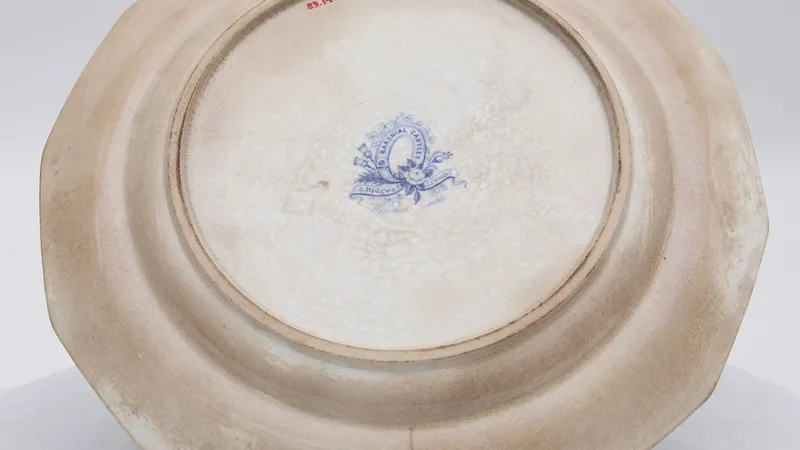
Start with the evidence the object carries. A maker's mark, a patent number, a country of origin mark or a construction method can each narrow the date. The guide on how to identify antiques covers where to find marks and which construction clues point to an age.
Then match the label to what you can show. If you can place it at least 100 years back, which in 2026 means 1926 or earlier, antique fits. If it is clearly older than 20 years but younger than that, call it vintage and name the decade. If it looks old but there is no sign of age, or it carries modern hardware or labels, treat it as retro or reproduction until something proves otherwise.
Checking a thrift store or garage sale find
If you are looking at a find in a thrift store or at a garage sale, the same order works quickly. Turn it over, look for marks, then check what comparable items sold for. Primo Worth can give you a first estimate from a photo with the recent sold listings behind it where they exist, which is useful for deciding whether a piece deserves a closer look. If you plan to resell it, a resale profit calculator turns the price you pay and a likely sale price into your profit and margin. The app cannot tell you whether a piece is a reproduction, so for anything that looks valuable, an appraiser or a specialist dealer is the next step. The post on thrift store finds worth money covers which finds tend to hold value.
Antique vs Vintage, in Short
Antique means at least 100 years old, a rule that comes from US customs law and rolls forward each year, so in 2026 it covers items made in 1926 or earlier. Vintage means at least 20 years old, a marketplace standard rather than a law. Retro is a style that revives the look of the past and can describe something made yesterday, and a reproduction takes its age from the year it was made, not from the period it copies.
None of these labels sets a price on its own. Value comes from demand, maker, condition and rarity, and the most useful thing a label does is point you to the right sales to compare with.