The short answer on 14k vs 18k gold: 14k is 58.3% pure gold and 18k is 75%. That one ratio decides everything else. 14k wears better and costs less; 18k has a deeper color, a lower allergy risk and more metal value in every gram. Neither is the "better" gold. They suit different hands, budgets and plans for the piece.
If you are choosing a ring, the questions are wear and skin. If you already own a piece and are thinking about selling it, the question is how much gold it holds and what buyers pay for that gold. This guide covers both, with the gold price dated so the numbers mean something.
14k vs 18k Gold: The Quick Verdict
Here is the comparison in one place. Each row is explained in the sections below.
| Category | 14k gold | 18k gold |
|---|---|---|
| Pure gold content | 58.3% | 75% |
| Common stamps | 14K, 14KT, 585, 583 | 18K, 18KT, 750 |
| Color (yellow) | Paler, lighter yellow | Deeper, warmer yellow |
| Everyday wear | Little to no upkeep | May need occasional polishing |
| Allergy risk | Possible | Unlikely |
| Melt value per gram (Nov 13, 2026) | $72.83 | $93.64 |
The wear and allergy rows follow the ring material table published by GIA, the Gemological Institute of America. The melt values come from the Kitco spot price on November 13, 2026, covered in the price section.
For a ring worn every day on active hands, 14k is the safer pick. For sensitive skin, a rich yellow, or a piece you want to hold more gold, 18k makes sense.
What 14k and 18k Gold Are Made Of
Karat counts gold in 24ths. Pure gold is 24k, so 14k is 14 parts gold out of 24 and 18k is 18 parts out of 24. Everything else in the alloy is other metals: usually silver, copper and zinc in yellow gold, and nickel or palladium in white gold.
In parts per thousand, GIA describes U.S. 14k as 583 parts gold and 417 parts other metals, and 18k as 750 parts gold and 250 parts other metals. Work it through and an 18k piece holds about 28.6% more pure gold than a 14k piece of the same weight. A 10-gram 18k chain contains 7.5 grams of pure gold; a 10-gram 14k chain contains about 5.83 grams.
Pure gold is too soft for most jewelry. According to GIA's guide to the best ring material, both 14k and 18k are alloyed for strength, which is why both are suitable for everyday wear while 24k is not.
Reading the 585 and 750 stamps
The quality mark is usually inside a ring shank, on a clasp, or on the tag near a necklace closure. American pieces tend to carry the karat, such as 14K or 18K. European and many vintage pieces use fineness numbers instead: 585 or 583 for 14k, and 750 for 18k. Kitco's purity table lists 14K, 14KT and 583 as marks for the same 58.3% grade, and 18K, 18KT and 750 for 75%.
A plating mark changes the story completely. GP, GF, RGP or HGE beside a karat number means a thin gold layer over base metal, not solid gold. If you are unsure whether a stamp means solid metal, treat it as unconfirmed until a jeweler tests the piece.
How much a stamp is allowed to miss
In the U.S., the karat stamp is a legal promise with a small tolerance. Under the gold fineness standard in the National Gold and Silver Stamping Act, a part of an article tested without solder may fall short of its stamp by no more than three parts per thousand.
When the whole article is tested as one piece, solder included, the allowance is seven parts per thousand for jewelry and three for watchcases and flatware. A piece that falls further short than that is understamped, which is why a stamp alone is a starting point and a jeweler's test is the confirmation.
Color: Why 18k Looks Richer
Pure gold is a deep, warm yellow. Every alloy metal added dilutes that color, so the more gold in the mix, the richer the yellow. 18k yellow gold, with only a quarter of its weight in other metals, looks warmer and more saturated than 14k.
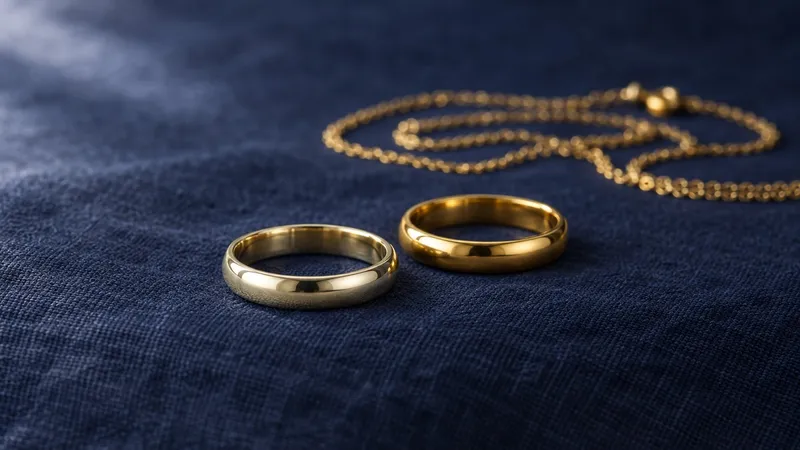
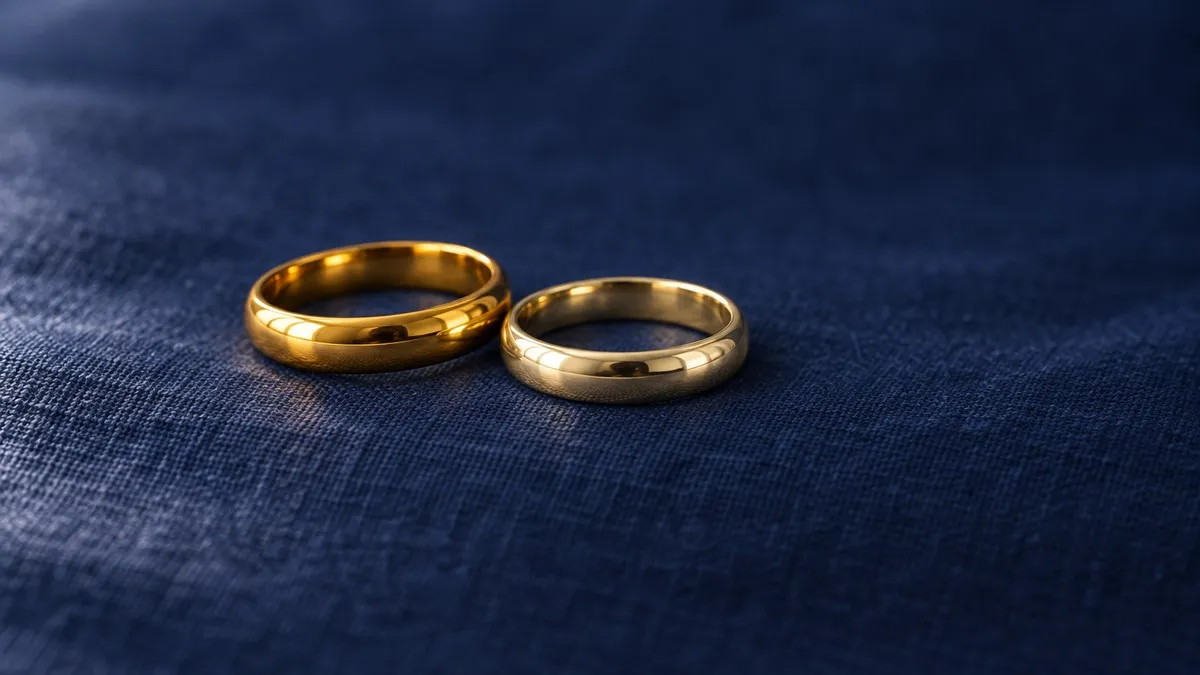
On its own, a 14k ring looks fully gold to most people. The difference shows when the two sit side by side, for example an 18k engagement ring stacked with a 14k wedding band. If matching tone matters to you, buy both pieces in the same karat.
Rose gold works the other way round. Its pink comes from copper, one of the alloy metals, so a 14k rose gold piece, with more alloy, can carry more of that pink than an 18k one, depending on the maker's recipe.
14k vs 18k white gold
White gold is where the karat difference nearly disappears to the eye. GIA's guide to choosing a white metal explains that white gold is gold alloyed with nickel or palladium, copper and zinc, and that it is often plated with rhodium for a bright white finish.
Because the plating covers both, GIA notes that it can be hard to tell 14k from 18k white gold just by looking. The stamp is the reliable way.
The plating also wears. According to GIA, rhodium wears away gradually, the ring may start to look warm in color, and it needs replating from time to time. That upkeep applies to 14k and 18k white gold alike, so it should not drive the choice between them.
Durability and Everyday Wear
The extra alloy in 14k makes it the harder-wearing of the two in daily use. In GIA's ring material table, 14k needs "little to none" in upkeep while 18k "may need occasional polishing". Both are rated suitable for everyday wear.
In practice, that means fine scratches and scuffs appear sooner on an 18k band, especially on the bottom of the shank and on the side that knocks against desks, steering wheels and other rings. Those marks are cosmetic. They do not change the karat or the amount of gold in the piece.
Hardness also depends on the exact alloy recipe and how the metal was worked, not on the karat number alone. Two 18k rings from different makers can wear differently. Treat "14k is harder" as a reliable rule of thumb rather than a guarantee for every piece.
Prongs, polishing and resizing
Prongs carry the most risk. A soft prong can bend and let a stone loosen, so a solitaire with thin prongs worn every day is the case where 14k earns its reputation. If you love 18k, a bezel or low-profile setting protects both the stone and the metal.
Every polish removes a thin layer of metal. Over decades, a softer ring polished more often loses more of its thickness. GIA lists both karats as resizable by up to two sizes without stones, so resizing does not separate them.
Weight is the difference people forget. GIA notes that higher-karat gold is denser, so the same design weighs more in 18k than in 14k. That makes an 18k piece feel more substantial on the hand, and it adds to the price, since you pay for more grams of a more valuable alloy.
Allergies: Nickel, Not the Karat Number
Most reactions to gold jewelry are reactions to nickel in the alloy, not to gold. The American Academy of Dermatology estimates that more than 18 percent of people in North America are allergic to nickel, and that nickel is one of the most common causes of allergic contact dermatitis. The AAD's nickel allergy advice is to avoid objects containing it.
Here 18k has a structural advantage: a quarter of its weight is other metals against more than 40% in 14k, so there is less room for nickel. GIA rates allergy risk as "unlikely" for 18k and "possibly" for 14k.
The karat is not the whole picture. GIA warns that people allergic to nickel should avoid white gold alloyed with nickel, whatever the karat, and names white gold alloyed with palladium, and yellow or rose gold without nickel, as good choices for sensitive skin. If you react to jewelry, ask the jeweler which alloy a piece uses and get the answer in writing. An 18k nickel white gold ring can still cause a rash that a 14k palladium one would not.
Price and Resale Value per Gram
The metal in a gold piece is priced from the spot price of pure gold. On November 13, 2026, the Kitco spot bid was $3,883.40 per troy ounce, or $124.85 per gram of pure gold. Applying each karat's gold share gives the melt value: the worth of the gold the piece contains, before any buyer's margin.
Melt value at the November 13 spot price
| Weight | 14k melt value | 18k melt value | Difference |
|---|---|---|---|
| 1 gram | $72.83 | $93.64 | $20.81 |
| 3 grams | $218.49 | $280.92 | $62.43 |
| 5 grams | $364.15 | $468.20 | $104.05 |
| 10 grams | $728.30 | $936.40 | $208.10 |
Per-gram values from Kitco's purity table on November 13, 2026, multiplied by weight. The gold price moves daily, so recheck the spot price before you rely on any figure.
Remember that weight and karat both count. A heavy 14k bracelet can hold more gold than a light 18k ring, so weigh the piece rather than judging by the stamp alone.
What a buyer actually pays
Melt value is a ceiling for scrap, not an offer. Kitco notes that dealers buying scrap typically pay below melt, while finished jewelry retails above it. How far below depends on the buyer, which is why the payouts in our comparison of gold jewelry buyers vary so much for the same piece.
At resale, the karat difference shows up almost entirely as metal value. A plain 18k band sells for more than its 14k twin because it holds more gold, not because buyers pay a premium for the karat itself. The exceptions are signed designer pieces and period jewelry, where the maker and the design can be worth more than the metal.
That gap between scrap and resale is where it helps to see what similar pieces actually sold for. Primo Worth gives an estimate from one photo of the piece: in Jewelry mode it reads the metal, karat, stones and hallmarks it can see, then checks the item against recent eBay sales where they exist and shows those sold listings so you can judge the matches.
Who Should Choose 14k, Who Should Choose 18k
The right karat depends on how the piece will be worn and what you want from it. These profiles cover most buyers.
Choose 14k gold if:
- You wear the ring every day and use your hands a lot, at work, at the gym or in the garden.
- The design has thin prongs or a thin band that you want to hold its shape for years.
- Budget matters more than the depth of the yellow.
- You live in the U.S. and want the karat most local jewelers stock and repair.
Choose 18k gold if:
- You have reacted to jewelry before and want the alloy with the least room for nickel, ideally a nickel-free one.
- You want the warmer, deeper yellow, or need to match an existing 18k piece.
- The piece is worn occasionally, or uses a bezel or low-profile setting that protects the metal.
- You want more gold per gram in a piece you may sell or pass on.
Two rings worn on one finger rub against each other all day, so buying the engagement ring and the band in the same karat keeps their tone matched and their wear even. Our 10k vs 14k gold comparison covers the step down from 14k if budget is the main constraint.
Checking What Your Own Piece Is Worth
If the gold is already in your drawer, start with the stamp, then the weight. A kitchen scale that reads to 0.1 gram and the melt table above give you a floor for plain gold. For anything with stones, a maker's signature or an unusual design, the floor is only part of the story.
Primo Worth can help with that first look. Snap a photo and it identifies the piece and returns an estimated value with a price range, checked against recent sold listings where they exist. It is an AI estimate, not a professional appraisal. A photo cannot confirm what a metal is or whether a stamp is honest, and the estimate is not what a buyer will pay. A jeweler's acid or electronic test confirms the karat in minutes.
When you sell, get the piece weighed and tested in front of you, ask for the per-gram rate the buyer is applying, and compare at least two offers. The guide to selling gold jewelry lists which buyers pay closest to melt.
Conclusion
14k gold is 58.3% gold and 18k is 75%, and every practical difference follows from that ratio. 14k is harder-wearing, lighter for the same design, cheaper and the everyday choice in the U.S. 18k has a deeper yellow, less room for nickel and about 28.6% more gold per gram, worth $93.64 against $72.83 at the November 13, 2026 spot price.
For allergies, the alloy matters more than the karat, so ask whether white gold contains nickel or palladium. For resale, weigh the piece and price the gold first, since plain jewelry of either karat sells mainly on its metal content. The stamp tells you which karat you have; a jeweler's test confirms it.