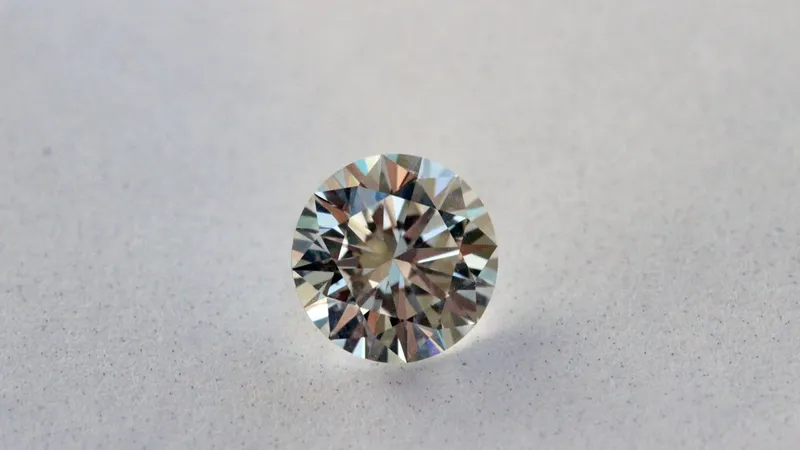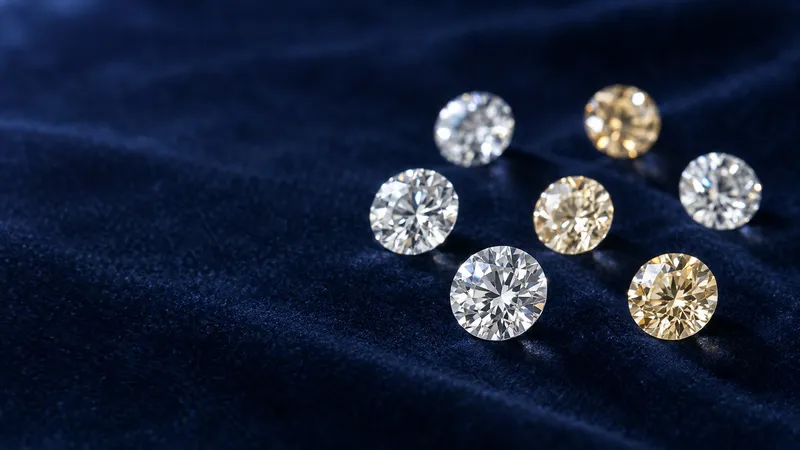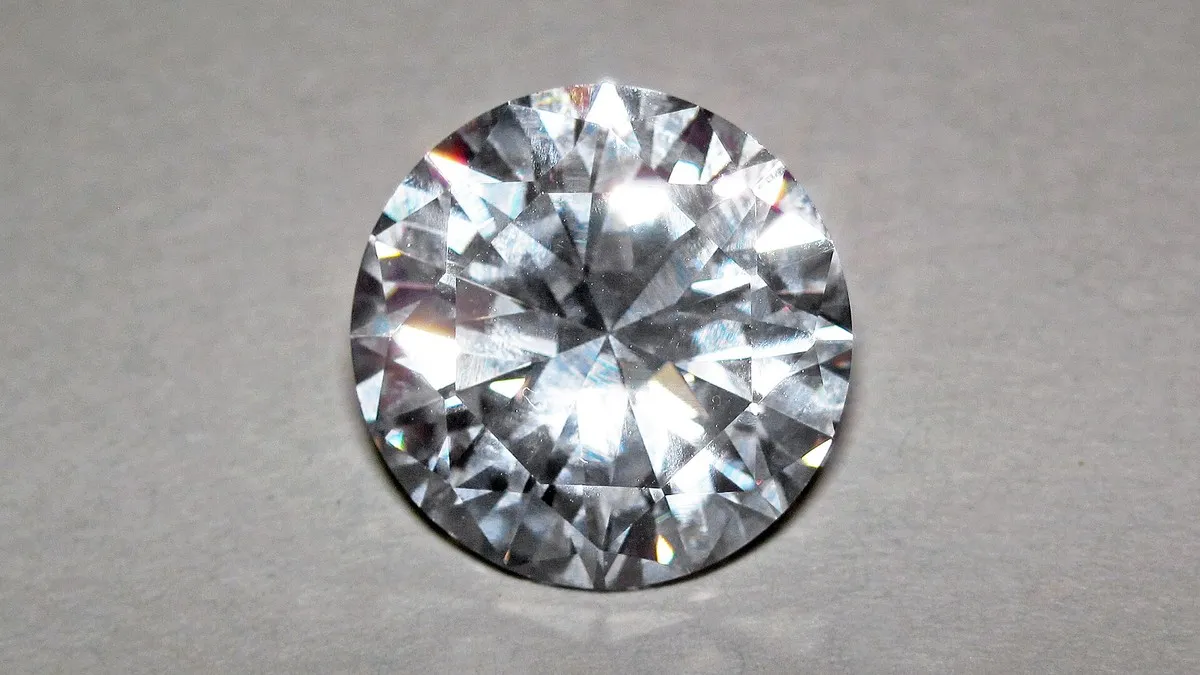
Cubic zirconia vs diamond comes down to one fact: a diamond is crystallized carbon, and cubic zirconia (CZ) is a manufactured crystal of zirconium oxide made to look like one. CZ is softer, about 8.5 on the Mohs scale against a diamond's 10, it throws more colored fire and less white brilliance, and it weighs roughly 65% more than a diamond of the same size. A diamond holds a resale market; a cubic zirconia is valued for its setting, not its stone.
If you found a ring in a drawer, inherited a pair of studs or are weighing a cheaper stone for everyday wear, the questions are the same: how do you tell which one you have, and what is each actually worth? This guide covers what each stone is, how they differ in sparkle, wear and weight, the tests that separate them, where lab-grown diamonds fit, and what the price indices said about diamond prices in the fall of 2026.
Cubic Zirconia vs Diamond: The Quick Verdict
The short version, before the detail. The diamond column covers natural and lab-grown stones alike, because a lab-grown diamond is the same material as a mined one and tests the same way. Where the two differ, mostly on price, the row says so.
| Property | Cubic zirconia | Diamond |
|---|---|---|
| What it is | Manufactured zirconium oxide | Crystallized carbon, mined or lab-grown |
| Mohs hardness | About 8.5 | 10 |
| Refractive index | 2.15 to 2.18 | 2.417 |
| Dispersion (fire) | 0.058 to 0.066 | 0.044 |
| Density | 5.6 to 6.0 g/cm³ | 3.50 to 3.53 g/cm³ |
| Thermal tester | Reads as a simulant | Reads as diamond |
| Median price, Sept 2026 | Not tracked by diamond indices | $2,335/ct natural, $443/ct lab-grown |
| Resale | Little to none for the stone | A real market for natural stones, thin for lab-grown |
The rest of this post explains each row, and which one actually matters when you are holding a stone and trying to decide what it is.
What Cubic Zirconia Is
Cubic zirconia is a lab-made crystal, not a natural mineral that turns up in jewelry. According to the CAMEO database of the Museum of Fine Arts, Boston, it is a single crystal of zirconium oxide, stabilized with calcium or yttrium so it grows in the cubic form. The technique was researched in France in the 1960s, perfected at the Lebedev Physical Institute in Russia in 1973, and CZ has been sold as an imitation diamond since 1976.
It took over the market fast. The GIA's imitation guide says synthetic CZ, introduced in the late 1970s, has surpassed every earlier diamond imitation in popularity. Most of it is colorless with high clarity and few if any imperfections, and it can be made in almost any color, so a pink or yellow CZ can pass for a colored diamond.
Why CZ Became the Default Lookalike
Two things made CZ the stone in most fashion jewelry. It is cheap to produce in large, clean pieces, and it is hard enough to survive daily wear far better than glass. GIA describes it as a hard and durable gem, though not as hard as diamond.
That combination is also why so many inherited rings turn out to be CZ. A piece bought as costume jewelry thirty years ago can look, at a glance, exactly like a family diamond.
What a Diamond Is, Mined or Lab-Grown
A diamond is carbon crystallized in the cubic system, and it is the hardest natural material, 10 on the Mohs scale. A mined diamond formed deep in the earth; a lab-grown diamond is the same carbon grown in a reactor. Both are diamond in every physical property that matters here.
CZ is a different thing entirely. GIA's guide to diamond simulants puts glass and cubic zirconia together as the common ones, both "completely unrelated to a diamond at the atomic level." A simulant imitates the look; a lab-grown diamond is the material itself.
That distinction drives everything that follows. A tester that reads "diamond" tells you the stone is carbon, not whether it came from a mine or a lab. Telling mined from lab-grown takes a gem lab, and GIA tests every stone it grades to confirm it is a diamond. It issues no grading reports for simulants at all.
Feature-by-Feature Comparison
Side by side on a jeweler's tray, a well-cut CZ and a diamond can look nearly identical. The differences show up in how they handle light, how they wear and how much they weigh.
Sparkle: Fire Against Brilliance
Gemologists split sparkle into two parts. Brilliance is white light returned to your eye, and it depends on the refractive index. Fire is the rainbow flashes, and it depends on dispersion.
A diamond's refractive index is 2.417, while CZ sits at 2.15 to 2.18, so a diamond returns more white light. CZ's dispersion of 0.058 to 0.066 is higher than a diamond's 0.044, so CZ throws more color. GIA sums it up in one line: CZ has slightly more fire but less brilliance than diamond.
In practice that means a CZ often looks "rainbow" under spotlights, while a diamond of similar size looks crisper and whiter. It is a clue, not a test, because cut quality changes both.
Hardness and Wear Over the Years
At about 8.5 on the Mohs scale, CZ is hard, but a diamond at 10 is in a class of its own. The difference shows with age. A CZ worn daily for years picks up surface scratches and rounded facet edges, visible under a 10x loupe, while a diamond keeps its sharp edges.
GIA also notes that CZ will yellow in color over time. An old CZ that looks slightly dull, cloudy or tinted, with soft facet junctions, is behaving exactly as the material is known to behave.
Weight and Density
This is the difference you can measure at home with a loose stone. CZ has a density of 5.6 to 6.0 g/cm³ against a diamond's 3.50 to 3.53, so it is roughly 65% heavier for the same size. The gem comparison site Loupewise puts it plainly: a CZ cut to the size of a one-carat diamond weighs about 1.65 carats.
So a loose stone that measures like a one-carat round but weighs well over a carat on a jeweler's scale is almost certainly not a diamond. Once the stone is set, the mounting hides its weight and this test is out.
Clarity and Color
Most natural diamonds have small inclusions visible under 10x magnification. CZ is manufactured, so it is typically flawless. A large, completely clean "diamond" in an old ring is a reason for suspicion, not celebration.
Color works the other way. A CZ is usually perfectly colorless when new, which is why a stone that grades as icy white but sits in a worn, inexpensive setting deserves a closer look.
How to Tell Cubic Zirconia From a Diamond
The good news is that CZ is one of the easier lookalikes to catch. The International Gem Society calls it the most popular diamond substitute, mainly because it is inexpensive, and it fails several simple checks. These are the ones worth knowing:
- Thermal tester. CZ conducts heat far worse than diamond, so a standard thermal diamond tester reads it as a simulant, even when the stone is set. Moissanite is the exception that fools a thermal tester, which is why newer testers add an electrical conductivity check.
- Read-through test. Lay a loose stone face down on printed text. With CZ, you can sometimes make out a little of the print; a well-cut diamond shows none of it.
- Loupe check. Under 10x, look for inclusions, which most natural diamonds have, and for scratches and rounded facet edges, which point to the softer CZ.
- Weight check. For a loose stone, compare its size with its carat weight. A CZ weighs about 65% more than a diamond of the same dimensions.
None of these replaces a jeweler, and the read-through and loupe checks only point one way. For more on what each kitchen-table method can and cannot prove, see our guide to home tests for a real diamond. A jeweler's thermal tester takes seconds. A gemologist confirms anything that matters.
What a Photo Can and Cannot Tell You
A photo shows the setting, the cut, any stamps on the band and the general look of the stone. It cannot measure heat conductivity, density or refractive index, so it cannot tell a CZ from a diamond. Primo Worth's Jewelry mode reads the metal, karat, stones and hallmarks it can see in a photo, but it does not tell a real stone from a fake, and it never replaces the tester.
Lab Diamond vs Cubic Zirconia
Lab diamond vs cubic zirconia is a different question from natural vs lab, and many shoppers mix them up. A lab-grown diamond is diamond: same hardness, same brilliance, same reading on a thermal tester. CZ is a different material that imitates it.
So the choice between them is not about looks under close inspection, where the lab diamond wins on every physical count. It is about price and durability. A lab-grown diamond costs far more than CZ, wears like a diamond and will not scratch or yellow. A CZ costs far less and will show its age after years of daily wear.
Where Lab-Grown Prices Have Gone
Lab-grown diamonds have become much cheaper, quickly. The Caratlytics price index for September 2026, built from live retail listings, put the median lab-grown diamond at $443 per carat, down 43.3% since its first release in December 2025.
Wholesale has fallen further. JCK reported in August 2026 that diamond analyst Edahn Golan's wholesale index for loose lab-grown stones fell another 14% year on year in the first quarter of 2026, and is down 96% since he began tracking prices in 2018. That closes some of the gap with CZ on price, but it also shapes what a lab-grown stone is worth once you own it, as the next section shows.
The trade press reads the same shift. A May 2026 market guide from The Gem Press described lab-grown stones as typically 70 to 85 per cent below the price of a natural equivalent, and called the lab-grown resale market very thin. Its advice to owners was to wear and enjoy the piece rather than think about resale, which is the same advice that has always applied to CZ.
What Each Costs and What Each Resells For
Price and resale are two separate numbers, and the gap between them is where most disappointment with jewelry comes from.
Retail Prices in Late 2026
The same Caratlytics release put the median natural diamond at $2,335 per carat in September 2026, up 7.5% on August, and 5.3 times the lab-grown median. The Diamond Price Index, a separate daily tracker, listed its 1.00 carat round, E to F color, VVS benchmark at $6,567 for natural and $781 for lab-grown on 24 October 2026, with natural down 19.5% and lab-grown down 27.6% over the previous year.
Those are benchmarks, and a specific stone's price depends on its cut, color, clarity and size. CZ does not appear in either index. It is priced as an inexpensive manufactured stone, and the setting usually costs more than the CZ in it.
Resale: Where the Real Gap Is
A diamond's resale value is a fraction of its retail price, and a CZ's is close to nothing. A natural diamond still has buyers: dealers, auction houses and online diamond buyers pay for it, usually well under what the first owner paid at retail.
Lab-grown is harder to sell. In the JCK report, New York dealer Farshid Roshanravan described a client who paid $25,000 for a 5-carat lab-grown ring in the early 2020s: "the resale value only exists for the mounting," he said, adding that "there is no resale value for lab-grown diamonds." A CZ ring is in the same position, worth what its gold or silver is worth plus whatever a buyer pays for the design.
What That Means for a Ring You Already Own
If the stone is CZ, the value is in the metal. A 14k gold band set with CZ sells as 14k gold, so the karat stamp and the weight matter far more than the sparkle. If the stone tests as diamond, the next step is a jeweler or gem lab report, because the difference between natural and lab-grown is now a large part of what it is worth.
For a first idea before you visit anyone, Primo Worth estimates what a piece is worth from one photo and checks it against recent eBay sales where they exist, showing the sold listings so you can judge the matches. It is an AI estimate, not a professional appraisal, and it cannot tell you whether a stone is CZ or diamond.
Who Should Choose Cubic Zirconia
CZ is a sensible choice when the look matters more than the material, and when you go in knowing it has no resale.
It suits travel rings and everyday pieces you would rather not risk losing, fashion jewelry in sizes and colors a diamond budget would never reach, and a placeholder stone while you save for something else. It also suits anyone who likes the extra fire CZ shows under lights. Plan on replacing a heavily worn CZ after some years rather than expecting it to last like a diamond.
Who Should Choose a Diamond
A diamond makes sense when durability and a lasting market matter. It is the stone for a ring you plan to wear daily for decades, because nothing else resists scratching as well.
Choose natural if keeping some resale value matters to you, and expect that value to be well below the price you paid. Choose lab-grown if you want a diamond's hardness and brilliance for less money and accept that its resale is thin and its price is still falling. Ask for a lab report either way, so you know which one you bought.
Is There a Better Alternative?
For someone who wants a diamond lookalike that wears better than CZ, moissanite is the usual middle option. GIA puts it at 9.25 on the Mohs scale, harder than CZ, with more than twice the fire of diamond and slightly more brilliance. It also passes a basic thermal tester, which is why it needs the electrical check mentioned above. Our post on how moissanite compares covers its looks, tests and resale in detail.
For a ring you already own, the better question is rarely which stone you would have chosen. It is which stone you have, which a jeweler's tester answers in seconds, and what the whole piece, metal included, would sell for.
Choosing Between Cubic Zirconia and a Diamond
Cubic zirconia and diamond look alike and are nothing alike. CZ is a manufactured zirconium oxide, softer at about 8.5 on the Mohs scale, heavier by roughly 65%, with more fire and less brilliance, and it reads as a simulant on any thermal tester. A diamond, mined or lab-grown, is carbon, the hardest natural material, and the only one of the two with a resale market.
On price, the indices in fall 2026 put natural diamonds at a median of $2,335 per carat and lab-grown at $443, with lab-grown still falling. CZ sits far below both and resells for the metal around it. If you are holding a stone and wondering, a thermal test tells you which it is, and the metal stamp often tells you more about its value than the stone does.