The honest answer to how to tell if a diamond is real is that no test you can run at home proves it. GIA, the lab that wrote the diamond grading scale, says plainly that there are no easy and reliable at-home tests that conclusively separate a natural diamond from other material. What you can do at home is gather evidence: paperwork, stamps, a careful look and a UV light can rule out some fakes and tell you whether a trip to a jeweler is worth it.
This guide sorts the popular checks into the ones worth your time, the ones that only hint, and the ones GIA tells you to skip. It ends where most people actually want to land: what the piece is worth once you know what the stone is.
How to Tell If a Diamond Is Real: Every Test at a Glance
Before the detail, here is how each check stacks up. "Rules out" means a result can point away from diamond; nothing in the home column can confirm one.
| Check | Where | What it can show | Verdict |
|---|---|---|---|
| Report and laser inscription | Home | A matching number ties the stone to a lab record | Strongest home evidence |
| Stamps on the setting | Home | The metal, which shapes value | A clue, never proof |
| Loupe | Home | Inclusions, bubbles, worn edges | Hard to read untrained |
| UV light | Home | A glow under long-wave light | A hint, never proof |
| Fog, newspaper, sparkle | Home | Inconsistent results | Skip |
| Sandpaper or scratch | Home | Damage | Never |
| Thermal or electrical tester | Jeweler | Rules out glass and CZ | Can miss moissanite and lab-grown |
| Lab report | Gem lab | What the stone is and how it formed | The answer |
What "Real" Means Before You Test
Three kinds of stone end up in a diamond ring. A natural diamond formed underground. A lab-grown diamond is carbon grown in a factory, and GIA is clear that synthetic diamonds are real diamonds with the same properties as natural ones. A simulant only imitates diamond: glass, cubic zirconia (CZ), moissanite, colorless zircon, synthetic spinel, YAG and others.
That changes the question. "Is it a diamond?" is something a jeweler's tester can often help with. "Is it a natural diamond?" is a lab question, because GIA states that you cannot spot a synthetic diamond through a loupe and the only way to tell is laboratory testing. The price gap between the two can be large, so the second question is usually the one that matters when you sell.
What you'll need
You do not need much for the useful checks:
- a soft cloth and warm soapy water, to clean the stone first
- a 10x jeweler's loupe and a bright light
- a long-wave UV flashlight, sold as a 365 nm torch
- any paperwork that came with the piece: a grading report, a receipt, an appraisal
Step 1: Look for a Report and a Laser Inscription
Paperwork beats every physical test you can run at home. GIA says that if your diamond already has a GIA grading report or a Diamond Dossier, you know you have a real diamond, because every GIA report tests the stone to make sure it is in fact a diamond.
A report on its own can be copied, so check it. Type the report number into GIA's Report Check database and compare the stored carat weight, shape and measurements with your stone. IGI, which helped develop the process, says most diamonds in the world now carry a laser inscription on the girdle, the thin outer edge. Under a loupe that number should match the report.
What a missing inscription means
Nothing on its own. Older stones and many smaller ones were never sent to a lab, and prongs can hide part of the girdle on a set stone. Labs also inscribe lab-grown stones: GIA's research journal notes inscriptions such as "LABORATORY-GROWN" or a grower's mark. So read the words as well as the number, and treat an inscription as a lead to a record rather than a verdict.
Step 2: Read the Stamps on the Setting
If you are working out how to tell if a diamond ring is real, start with the band. Look inside it or on the clasp for a metal mark such as 14K, 585, 18K, 750 or PLAT. Our guide to hallmarks and karat stamps explains what each one means.
The metal tells you about value, not about the stone. GIA lists "you can spot a real diamond by its setting" as a myth: natural diamonds are often set in gold or platinum, but today some are set in silver, and antique pieces mix gold and silver. A worn or clumsy setting can simply be old or repaired. A plated base metal ring with a big clear stone is a reason to be more suspicious, nothing more.
This is also where Primo Worth fits into a home check. Its Jewelry mode reads the metal, karat, stones and hallmarks it can see in one photo. A photo cannot confirm what a stone or a metal is, so the app does not tell you whether a diamond is real.
Step 3: Clean the Stone and Look at It
Wash the piece in warm soapy water and dry it with a soft cloth. GIA points out that diamonds attract grease and a dirty one will not sparkle, so an unwashed ring can make a real stone look dull and a fake look no worse.
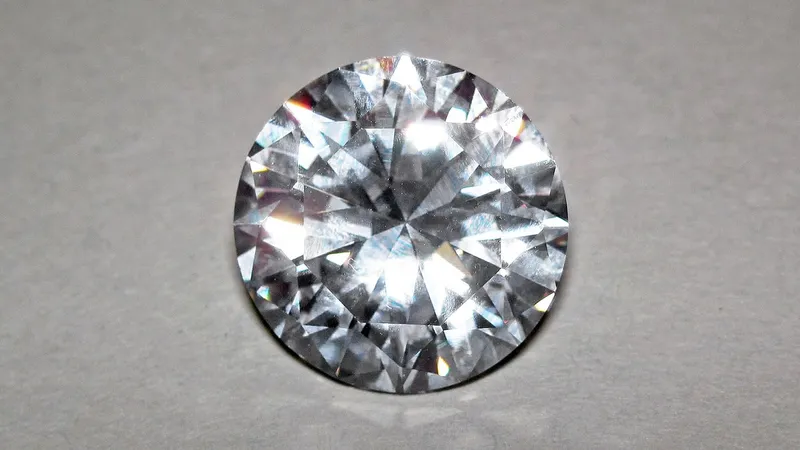
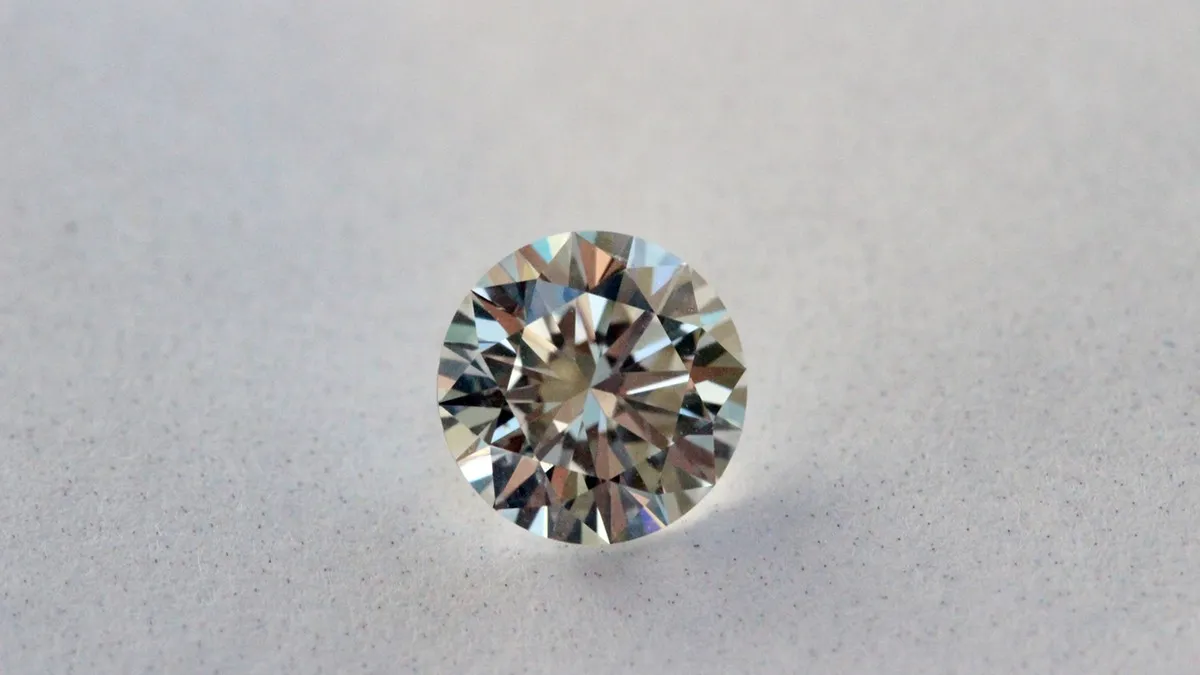
Then drop the idea that sparkle settles anything. GIA calls "if it sparkles, it must be a real diamond" a myth: to an untrained eye moissanite, CZ and natural zircon all sparkle. Cut changes the picture too. An emerald cut diamond does not sparkle like a round brilliant simulant, and a single cut diamond with 17 or 18 facets looks less lively than a round brilliant with 57 or 58.
Edges and wear
Look at the lines where facets meet. Rounded, soft looking edges point to a molded imitation such as plastic or some glass. Sharp edges prove nothing, since GIA notes that natural diamonds, lab-grown diamonds and every gem material used to imitate them have sharp edges. Even a real diamond can show abraded facet junctions from years of wear.
Step 4: Use a Loupe, With Care
A 10x loupe is the tool jewelers start with, and it can show you real things: gas bubbles that suggest glass, worn edges, an inscription. GIA is frank about its limits for everyone else. Most people find it hard to spot small inclusions among the reflections and facet junctions, some diamonds are flawless, and imitations can have inclusions of their own.
So read a loupe the cautious way. Round gas bubbles are a reason to doubt the stone. Seeing no inclusions is not, and seeing some is not proof of diamond either.
Doubled facet lines
Moissanite is the simulant most likely to fool a home check, because it looks far closer to diamond than the imitations before it. Under a loupe you may see its facet edges doubled. Our comparison of moissanite and diamond covers that doubling effect and the other differences in detail.
Step 5: Try a UV Light, and Read It Correctly
Hold the stone under a long-wave UV light in a dark room. A blue glow is the response people look for, and it is common: GIA's fluorescence study of more than 26,000 diamonds found that about 25% to 35% showed some fluorescence under a standard long-wave lamp, and blue is by far the most common color.
That means most diamonds do not glow at all, so no glow tells you nothing. GIA goes further and lists "fluorescence means the diamond is real" as a myth outright: some lab-grown diamonds fluoresce, and some simulants, cubic zirconia among them, can glow too.
What jewelers look for under UV
GIA's UV testing guide for retailers explains that a lingering glow, called phosphorescence, is rare in natural diamonds but common in lab-grown diamonds made by the HPHT method. It also notes that lab-grown diamonds often glow brighter under short-wave UV than under long-wave. Both checks rely on a short-wave lamp, a trade tool rather than the long-wave torch most people own, so they are ones to ask a jeweler about. If a stone keeps glowing after the light goes off, GIA's advice is to refer it to a gem lab.
Home Tests GIA Says to Skip
Most of the quick real or fake tests that circulate online fail for the same reason: too many things change the result. In its list of diamond test myths, GIA works through them one by one.
The fog test
Breathe on the stone and watch the mist clear. GIA says the result cannot be repeated consistently: nobody specifies how long to breathe or how large the stone must be to see anything, ambient humidity changes the result, and natural and lab-grown diamonds behave exactly the same way. At best it adds a weak hint about simulants.
The newspaper or read-through test
The idea is that a well-cut round brilliant bends light so strongly that you cannot read print through it. GIA says it can give a trained gemologist a quick indication but confuses everyone else, because lighting, dirt, placement, eyesight, the stone's shape and proportions, and whether it is mounted all change what you see. It should never be used as a definitive test.
Sandpaper, scratching and heat
GIA calls the sandpaper test destructive and says never to use it. Sandpaper grit usually sits between 7 and 9 on the Mohs scale, so it can scratch a softer stone and the metal around it, and lower the value of a piece that may have been fine. Jewelers such as Leibish also warn against heat tests, and point out that several materials can scratch glass, so a scratch proves nothing either.
What a Jeweler's Tester Can and Cannot Tell
If the home checks leave you unsure, a jeweler is the next step, and many will test a stone quickly with a handheld tester. Those tools are better than any kitchen test, but they have blind spots worth knowing before you trust a beep.
According to IGI's handheld tester guide, CZ and moissanite have different properties from diamond, while lab-grown diamonds are chemically the same. Testers that measure electrical conductivity have historically been trusted to separate diamond from moissanite. IGI warns that some lab-grown diamonds can still test as moissanite on those devices, and that natural or lab-grown blue diamonds containing boron conduct electricity as well.
Natural or lab-grown needs a lab
IGI's conclusion is that separating lab-grown from natural diamonds is best done by a gemological laboratory with spectrometry, UV, photoluminescence and other methods. GIA builds a desktop instrument, the iD100, that jewelers can use to screen colorless and near-colorless stones for simulants and lab-grown diamonds. Ask which equipment the jeweler uses, because a simple thermal probe and a spectroscopy screener answer very different questions.
When to Send the Stone to a Lab
GIA's own recommendation is to take the jewelry to a trained jeweler first and, if necessary, ask for the stone to be tested by an independent gemological laboratory. A lab report is worth it when the answer changes real money: a larger stone, an inherited piece you plan to sell, or a purchase where the seller claims a natural diamond.
For a small accent stone in a costume or fashion ring, the cost of a lab report may outweigh what is at stake. There the useful question is usually the metal, which brings you back to the stamps from Step 2.
What a Real Diamond Is Worth Once You Know
Knowing what the stone is turns the next question, what the piece is worth, into one you can actually answer. A natural diamond, a lab-grown diamond and a moissanite of the same size sell at very different prices, and GIA notes that the gap between natural and lab-grown can be considerable. The setting adds its own value through the gold or platinum.
Primo Worth gives you a first read on that. Snap a photo in Jewelry mode and it identifies the piece and returns an estimated value checked against recent eBay sales where they exist, with the sold listings shown so you can judge how close the matches are. It is an AI estimate, not a professional appraisal, and a photo cannot confirm whether the stone is a diamond. Settle that question with the checks above first, then price the piece as what it really is.
The Bottom Line
No home test proves a diamond is real, and GIA says so directly. A grading report you can verify, with a laser inscription that matches it, is the strongest evidence you can check yourself. Stamps, a loupe and a UV light add clues and can raise doubts, while the fog, newspaper and sparkle tests mostly add confusion and the sandpaper test adds damage.
Lab-grown diamonds are real diamonds, and only a lab or a jeweler with the right instrument separates them from natural ones. Handheld testers rule out glass and CZ but can misread moissanite and some lab-grown stones. When the answer decides a sale or a large purchase, the jeweler and the lab are where it gets settled.