If you want to know how to clean coins without losing value, the honest first answer is that most coins with any collector value should not be cleaned at all. When a coin is so dirty you cannot read it, the safe method is a soak in distilled water, a wash with diluted mild soap, a rinse and an air dry, with no rubbing at any point. Everything stronger, from baking soda to silver dip, removes metal and leaves marks that collectors spot right away.
That advice can feel frustrating when you are holding a crusty old penny or a dark silver dime from a relative's drawer. This guide explains why cleaning hurts value, how to check a coin before you touch it, the gentle method the experts allow, how copper, silver and dug coins differ, and when to hand the job to a professional.
Why Cleaning Usually Lowers a Coin's Value
The American Numismatic Association answers the question "Should I clean my coins?" in its collecting FAQ with a short "NO!" Its reasoning is simple: a circulated coin that has been cleaned becomes a coin that is bright but worn, and most experienced numismatists can spot one easily.
The grading services treat cleaning as damage. PCGS explains in its article on cleaning that abrasive methods leave hairlines and changes in the metal that show under the right light and magnification. A coin like that comes back labelled "Genuine-Cleaned", and PCGS says a coin with "Genuine-Cleaned XF details" is not worth the same as a coin numerically graded XF; its value falls into the Fine range or lower.
NGC follows the same logic. Under its details grading system, coins that were improperly cleaned cannot receive a numeric grade from 1 to 70. They get a wear grade plus a label naming the problem, such as Brushed, Polished, Burnished or Improperly Cleaned.
How much value a cleaned coin loses
The loss varies with how harsh the cleaning was. Jeff Garrett, writing for NGC in 2025, says a details coin is usually valued at least one grade lower than a problem-free coin, and sometimes two. He gives examples from early gold: an 1804 $5 with light cleaning on one side could still bring 75% or more of a problem-free example, while an 1805 $5 with almost polished surfaces was worth about 35% to 45% of a coin in the lowest uncirculated grade.
Check the Coin Before You Clean Anything
The most important step happens before any water touches the coin: find out what it is. The date, the mint mark, the metal and the condition decide whether you are holding pocket change or something worth protecting. A guide to working out what an old coin is worth walks through that process step by step.
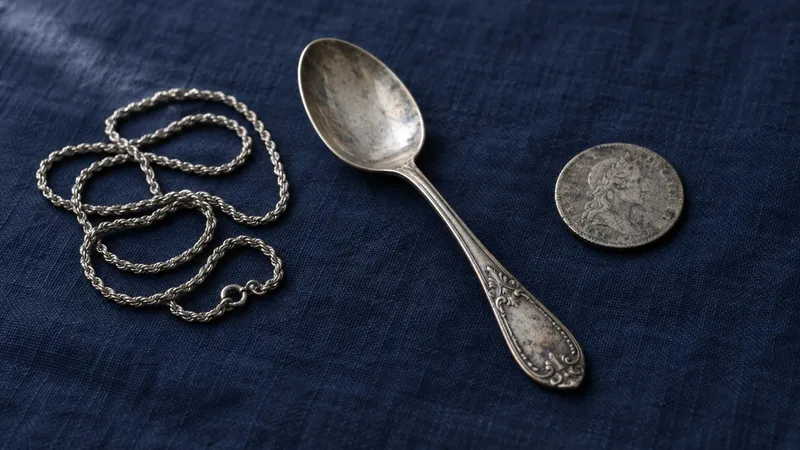
If the date is hidden under dirt, a plain soak in distilled water often loosens enough grime to read it without rubbing. Two rough rules help when you have no price guide at hand. Any readable silver coin deserves the careful path, and any copper coin older than the wheat cent, such as Indian Head cents, large cents and colonial coppers, deserves it even more.
Primo Worth can help with this first check. Its Coin mode reads the denomination, year and mint mark from one photo, notes what drives the value, and gives an estimated value checked against recent eBay sales where they exist. It is an AI estimate, not a professional appraisal, and a photo cannot reveal the fine hairlines that cleaning leaves, so it never replaces a dealer looking at the coin under a loupe.
What You'll Need for Safe Coin Cleaning
The safe method uses cheap, gentle supplies. The Canadian Conservation Institute, a federal heritage body, lists almost exactly this kit in its note on caring for coins:
- Distilled water, never tap water, since tap water carries chlorine and minerals
- A mild liquid dish soap, diluted, and never powdered dishwasher detergent
- A small plastic or glass container for each coin
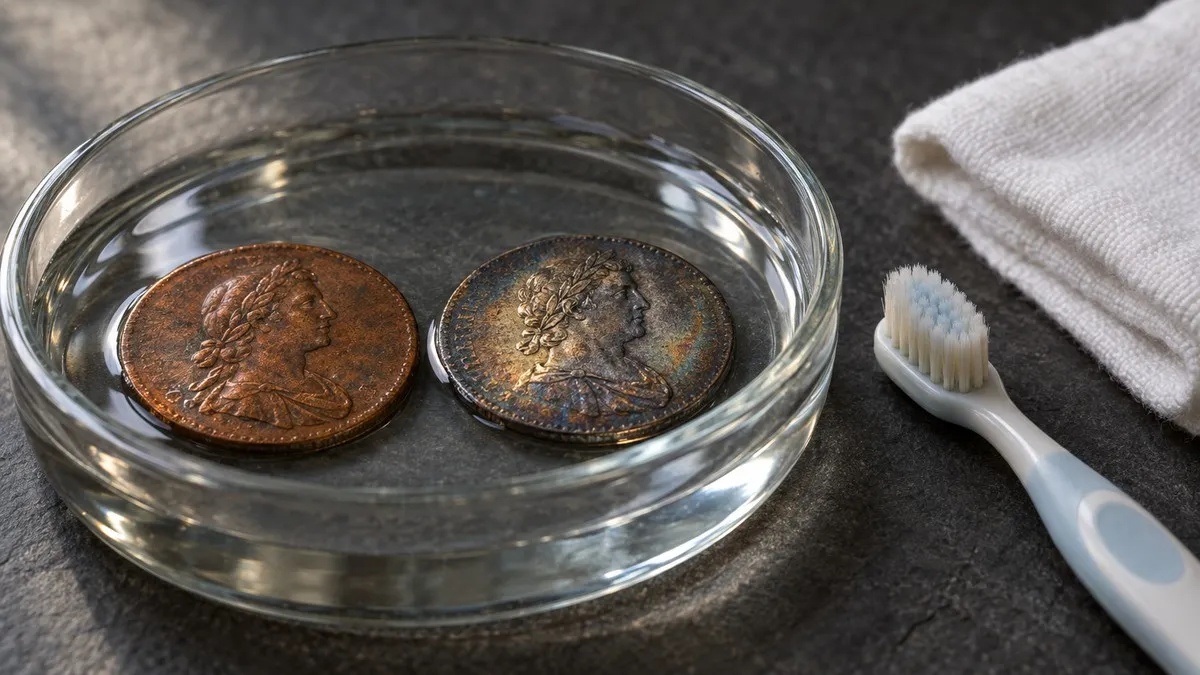
- A very soft brush, such as a baby toothbrush, only for loose dirt on low-value coins
- Soft paper towels or a lint-free cloth for drying
- Acetone, optional, for grease and PVC residue, used in a ventilated room
Work over a towel so a dropped coin does not land on a hard counter. Handle every coin by its edges, because skin oils and salts are part of what you are trying to remove.
How to Clean Coins Without Damaging Them
This is the method the Canadian Conservation Institute describes, with the ANA's advice folded in. It removes dirt and handling residue without touching the coin's patina or toning.
Step 1: Soak the coin in distilled water
Put the coin alone in its container and cover it with distilled water. Coins can scratch each other, so never soak a handful together if any of them might matter. Leave it for a day, and longer if the dirt is heavy, changing the water when it turns cloudy.
Step 2: Wash it in diluted mild soap
Move the coin into lukewarm distilled water with a few drops of mild dish soap. The CCI is clear on one point: do not scrub the surface. Let the soap do the work, and turn the coin gently by its edges.
Step 3: Rinse in clean distilled water
Rinse the coin thoroughly in fresh distilled water so no soap film is left behind. The ANA gives the same instruction for coins too corroded to recognise: mild dish soap, distilled water, a thorough rinse.
Step 4: Use acetone only for grease or PVC
The CCI suggests a soak in acetone to degrease and dry the coin. Acetone also dissolves residue from soft PVC flips, the old plastic holders that leach onto coins and leave a green, sticky film. Skip this step for medals that may carry a shellac or resin coating, since acetone can dissolve it.
Step 5: Air dry or pat dry
Lay the coin on a paper towel and let it air dry, or pat it very gently. Never rub it dry, because any grit left on the surface becomes sandpaper.
Step 6: Store it in PVC-free holders
Once clean and dry, keep the coin in an inert holder rather than a soft vinyl flip. NGC notes that PVC from flips and some mint packaging slowly leaches onto coin surfaces and, if left, causes permanent damage.
How to Clean Old Copper and Silver Coins
Copper and silver react differently, so they need different restraint.
Old copper coins
The brown or green surface on an old cent is patina, a layer that formed over decades and that collectors regard as part of the coin. Acids such as vinegar or lemon juice strip it and leave raw pink metal that never looks natural again. NGC's conservation arm, NCS, notes that an even granular texture or an unusual colour on a copper coin is a sign of chemical cleaning. For copper you care about, stop at distilled water and soap.
Old silver coins
Silver usually darkens rather than crusts. According to the CCI, that toning is silver sulphide, and toned or tarnished silver coins are often prized by collectors. The colours, from yellow and red to blue and black, come from the thickness of the film. Soap and distilled water lift dirt without removing the toning, and that is as far as a home cleaning should go on a silver coin with a readable date.
How to Clean Rusty or Corroded Coins From the Ground
Coins found metal detecting are a special case, because they come up caked in soil and corrosion. Photograph the coin where it came out of the ground, keep it apart from other finds, and do not rub it on your thumb or your jeans. Dirt is abrasive, and rubbing it across a coin sands the surface.
At home, the distilled water soak comes first and can run for a week or more. Many detectorists use an olive oil soak on crusty copper they have already decided has little value; it works slowly, over weeks or months, and leaves a residue that needs a soap and water wash afterwards. It does nothing a water soak cannot do on a coin that matters.
What looks like rust on a dug coin is usually green verdigris on copper or hard deposits from the soil. Removing corrosion, as opposed to dirt, is a job for a conservator, according to the CCI. A coin that stays unreadable after a long water soak is a candidate for professional help rather than stronger chemicals.
What Never to Use on a Coin You Care About
Most home remedies that make a coin shiny do it by removing metal. The NGC and CCI guidance points to the same list of things to avoid:
- Baking soda pastes, toothpaste and silver polish, which are mild abrasives
- Vinegar, lemon juice, ketchup and cola, which are acids
- Silver dips, which contain acids that keep working if not fully rinsed off
- Polishing cloths and metal cleaners with grit
- Wire brushes, steel wool, scouring pads and pencil erasers
- Rock tumblers and ultrasonic cleaners
Pencil erasers deserve a special mention. Jeff Garrett calls them a very common tool of numismatic destruction, and he notes that NGC generally uses the "Improperly Cleaned" label for mechanical cleaning, the hairlines that harsh rubbing leaves behind.
When Cleaning Is Fine: Pocket Change and Melt Silver
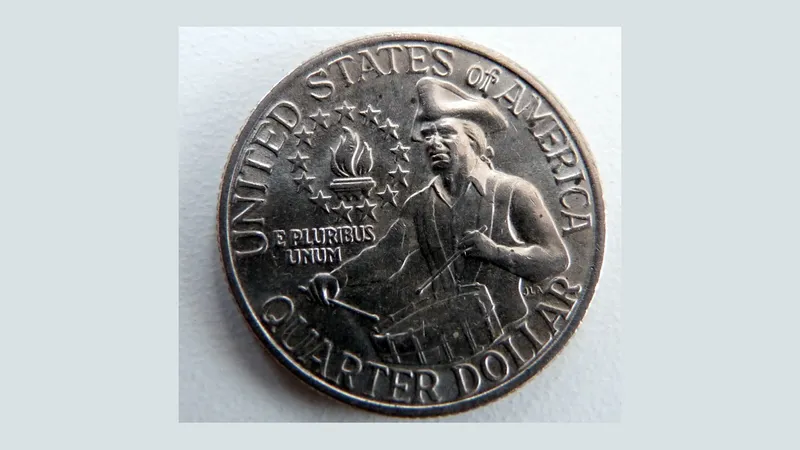
There is one group of coins you can clean any way you like: modern clad coins you plan to spend, and worn common-date silver you are keeping only for its metal. A worn clad quarter from your change is worth its face value whether it shines or not, and a scratched silver dime sold for melt is priced by weight.
The catch is being certain the coin has no collector value before you start. Check every wheat cent and every silver-coloured coin in a batch first, because one key date dropped into a tumbler with a jar of clad is a costly mistake. Keep the cleaned spending coins away from anything you might want to sell later.
When to Send a Coin to a Professional Conservator
Some problems need chemistry a home kitchen cannot safely provide. PCGS says its Restoration Service handles PVC residue, dirt and debris, adhesive or tape residue, copper spots on gold and artificially enhanced toning, using about 40 different techniques chosen coin by coin. NGC lists haze, spots, encrustation, verdigris, corrosion and tarnish among the problems its conservation service removes.
What a conservator cannot fix
Conservation removes contaminants; it does not undo damage. NGC states that it never fills holes or smooths scratches, and it describes harsh cleaning as not correctable with conservation. Professional conservation also costs a fee per coin on top of any grading fee, so it makes sense for coins whose value justifies the expense, which is another reason to identify a coin first.
Troubleshooting Common Coin Cleaning Mistakes
The coin is already cleaned. Do not try to fix it. NCS explains that cleaning forcibly removes surface metal, which cannot be replaced, and any attempt to remove the resulting scratches adds more scratches. A cleaned coin can still be certified with a qualifier, and Garrett notes that a details coin is often the only affordable way for many collectors to own a key date.
You cannot tell whether a coin was cleaned. Tilt it under a single light and look for fine parallel scratches that run from the flat background over the raised design, which NCS identifies as a sign of mechanical cleaning. An unnaturally bright, even shine on an old, worn coin is another clue.
You want to sell a cleaned coin. Describe it honestly as cleaned and expect a lower price than a problem-free example. A comparison of where to sell coins covers dealers, auctions and online buyers. Before you list it, you can snap a photo with Primo Worth to see an estimated value and the recent sold listings behind it where they exist, then compare those listings with your coin's surface; the estimate is a starting point, not the price a buyer will pay.
Key Takeaways on Cleaning Coins
Cleaning almost always lowers a coin's value, because it removes metal and leaves marks that PCGS and NGC label as damage. Cleaned coins typically trade at least one grade lower, and harshly cleaned ones can fall below half the value of a problem-free example.
Identify the coin before you touch it. If it may be worth more than face or melt value, the most you should do at home is a distilled water soak, a gentle wash in diluted mild soap, a rinse and an air dry, with acetone only for grease or PVC residue. Leave patina on copper and toning on silver alone, keep acids and abrasives away from anything that matters, and send corrosion and residue problems on valuable coins to a professional conservator.